Visit my new blog:
Liturgical Music Studio
Thanks
10/22/06

10/20/06
In remembrance of the 62nd Anniversary of the Massacre of Agdangan
October 17th 1944
A dusty gray smoke
replaces the promise of
immaculate clouds of a new day
in the land scorched by the sun.
No one foresaw the fate of
doomed families, an end so grim
to stumble upon.
The sword unseeing, thrusts
and slashes with abandon
and lives cut down
like sheaves of grass and
left to prosper on fallow fields.
All to appease the vengeful,
bitter heart of the conqueror.
The old resigned to the falling
of the embers from the roof,
shield their wrinkled worn faces
with their bony arms,
and the young and the strong
let out suffering cries
and writhe in pain and wriggle
to be free of binding ropes as babies
are tossed to the bayonets
and the holocaust.
And a day passes to memory
from the infamy war
A dusty gray smoke
replaces the promise of
immaculate clouds of a new day
in the land scorched by the sun.
No one foresaw the fate of
doomed families, an end so grim
to stumble upon.
The sword unseeing, thrusts
and slashes with abandon
and lives cut down
like sheaves of grass and
left to prosper on fallow fields.
All to appease the vengeful,
bitter heart of the conqueror.
The old resigned to the falling
of the embers from the roof,
shield their wrinkled worn faces
with their bony arms,
and the young and the strong
let out suffering cries
and writhe in pain and wriggle
to be free of binding ropes as babies
are tossed to the bayonets
and the holocaust.
And a day passes to memory
from the infamy war
10/17/06
A Halloween Story in Baao
A Ghost of Fire
An Old Ghost Story set in Baao
Though we have no equivalent of a Halloween night in the Philippines, stories about fiery ghosts are heard in the town. With just a few details missing, we have a story like that of Washington Irving's "The Legend of Sleepy Hollow". These stories, I suspect arose from our proximity to a lake which would on occasion discharge the phenomenon we call in the vernacular as "santelmo". In Physics, "santelmo" or "St. Elmo's fire" is a ball of methane gas evaporating from a stagnant body of water like a marsh, lake or ricefield. Static electricity could set it aglow and the glowing ball would float eeriely on the surface of the water or ground were the wind would take it. I've heard of local farmers play with it by fanning it to make it move to any direction. To the unfamiliar, it would be a ghostly apparition, thus the stories we hear as children about ghosts that we might meet on the road at night. The following story was found published in a pre-war American magazine among a compilation of legends from the Philippines. The story was reprinted recently in the Philippines in a thick compilation of Philippine Legends. What other stories about Baao are hiding among the countless American publications about the Philippines I wonder.
Paulix Robosa
Once upon a time their lived in the town of Baao two robbers who were accustomed to attacking people who went past their hut, for in those days the government was weak. One day, a Tagalog merchant went to the robbers to sell them some clothes. The robbers offered the merchant good food and bed for his siesta. When they saw that he was sound asleep, they killed him and threw his body into the river. The night after the merchants death, people in the neighborhood heard a hoarse voice saying over and over again ”Give one half of my money to my family.” Chance travelers were terrified, for the spirit would whisper to them too. Finally the officials of the town asked the priest to exorcise the spirit. When he had performed the rites, the voice became silent. However at night a fiery man would walk about the town between the hours of seven in the evening to six in the morning. The inhabitants were so frightened that they ate their last meal of the day at Four o’clock, after which they shut up their houses tightly until the next morning. One time a traveler arrived in Baao about eight in the evening. As he passed the church, he saw the fiery man coming toward him. In terror he whipped up his horse and tried to get away, but the ghost caught hold of the reins and stopped the horse. The ghost turned into a real man and said, “Please tell the officials about the two robbers near the town. They killed a man secretly and took away his money.” Then the figure disappeared forever. In the morning the traveler hurried to the tribunal and told his story. The police captain sent five strong men to capture the robbers. Their guilt was proven and they were put into prison for a long time
10/8/06
8/27/06
A Story for the Feast of St. Bartholomew
The Legend of the Lost Statue of St. Bartholomew
This is an old story about Baao’s patron saint, which I calculate, based on the generations that have heard it, to be more than a hundred years old. The story was told to me by an 80-year old neighbor who as a child, heard it from one of my great grandmothers who also narrates that she heard it from her own grandmother. In my childhood, I’ve heard parts of the story told to me by my parents. It’s been a while since I received a tip from a relative that in Nagcarlan, Laguna, there is indeed a statue of St. Bartholomew containing an inscription of “San Bartolome, Baao, Camarines”. I still do not have the time and resources to verify the truth on this. The following is the story as I heard it from my neighbor who has since passed away.
Paulix Robosa
There is a legend that has been preserved unto this day which is of small significance to our town. Whether this is true or not, I can only say one thing for sure, that nobody has ever exerted effort to prove it.
There was a time during the Spanish period when thunderstorms were very frequent. On one occasion, lightning struck the steeple of the town church which was then entirely built of wood and immediately caught fire. As the thunderstorm was at its worst, no one dared came out and come near the church. The small wooden church would be quickly consumed by the fire were it not for an astonishing but timely intervention by our Patron saint. It is said that as the fire raged, people could see, amidst the flames, our Patron Saint locked in battle with the fire. Soon as the fire subsided, it was found that the church was only partly burned and the statue of the saint only showed slight burns from the fire.
Despite the slight damage suffered by the church, the Parish Priest decided to build a new church in its stead. After completion of this new church it was also decided to replace the old singed statue of St. Bartholomew. So the day came when a perfectly new statue was placed in the altar, to everyone surprise the next day, this new statue showed the burnt marks found on the old image. An even bigger surprise came when the people found out that the old statue is nowhere to be found. The statue seemed to have disappeared angered it was thought, by being abandon by the people.
News later came that a statue of St. Bartholomew was found floating in waters somewhere in the Tagalog provinces and that the inhabitants who found it had difficulty pulling it out of the water because of its great weight. Now the statue they say can be found in one of the churches in one of the towns of this region.
Very few people now know of this story but this is very old and was told to generations within the town of Baao.
This is an old story about Baao’s patron saint, which I calculate, based on the generations that have heard it, to be more than a hundred years old. The story was told to me by an 80-year old neighbor who as a child, heard it from one of my great grandmothers who also narrates that she heard it from her own grandmother. In my childhood, I’ve heard parts of the story told to me by my parents. It’s been a while since I received a tip from a relative that in Nagcarlan, Laguna, there is indeed a statue of St. Bartholomew containing an inscription of “San Bartolome, Baao, Camarines”. I still do not have the time and resources to verify the truth on this. The following is the story as I heard it from my neighbor who has since passed away.
Paulix Robosa
There is a legend that has been preserved unto this day which is of small significance to our town. Whether this is true or not, I can only say one thing for sure, that nobody has ever exerted effort to prove it.
There was a time during the Spanish period when thunderstorms were very frequent. On one occasion, lightning struck the steeple of the town church which was then entirely built of wood and immediately caught fire. As the thunderstorm was at its worst, no one dared came out and come near the church. The small wooden church would be quickly consumed by the fire were it not for an astonishing but timely intervention by our Patron saint. It is said that as the fire raged, people could see, amidst the flames, our Patron Saint locked in battle with the fire. Soon as the fire subsided, it was found that the church was only partly burned and the statue of the saint only showed slight burns from the fire.
Despite the slight damage suffered by the church, the Parish Priest decided to build a new church in its stead. After completion of this new church it was also decided to replace the old singed statue of St. Bartholomew. So the day came when a perfectly new statue was placed in the altar, to everyone surprise the next day, this new statue showed the burnt marks found on the old image. An even bigger surprise came when the people found out that the old statue is nowhere to be found. The statue seemed to have disappeared angered it was thought, by being abandon by the people.
News later came that a statue of St. Bartholomew was found floating in waters somewhere in the Tagalog provinces and that the inhabitants who found it had difficulty pulling it out of the water because of its great weight. Now the statue they say can be found in one of the churches in one of the towns of this region.
Very few people now know of this story but this is very old and was told to generations within the town of Baao.
7/7/06
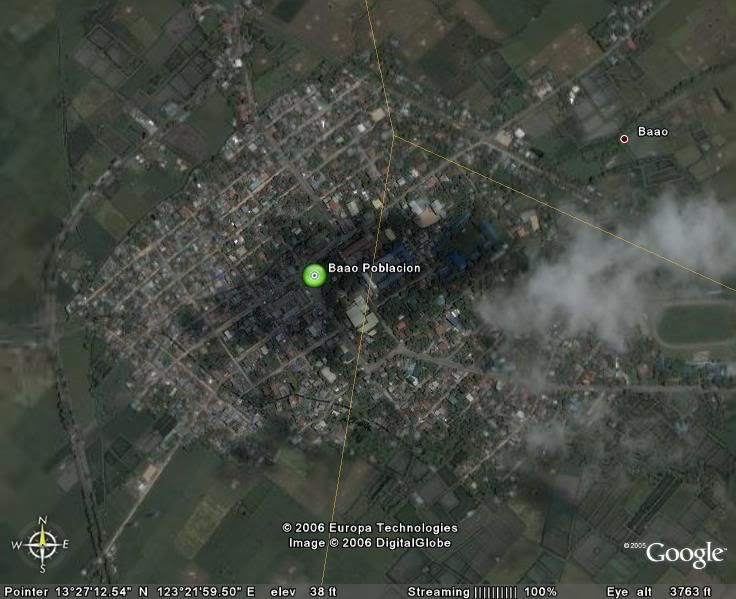
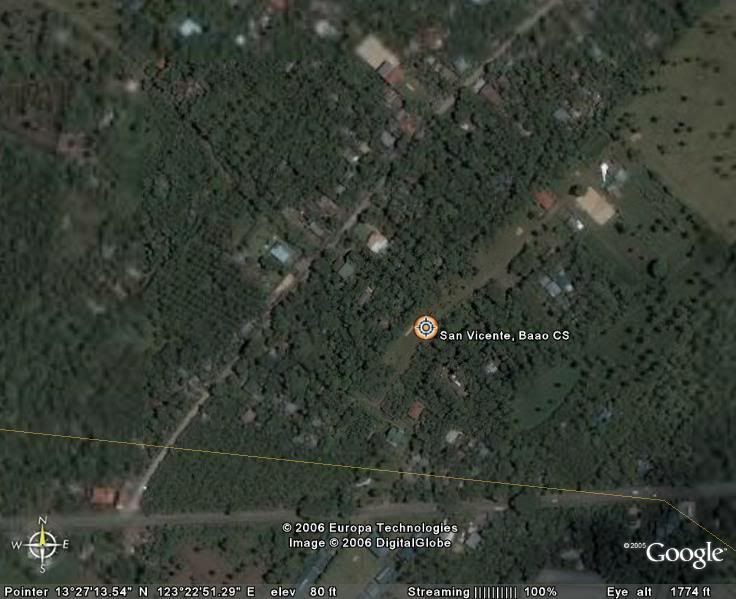
Satellite Images of Baao
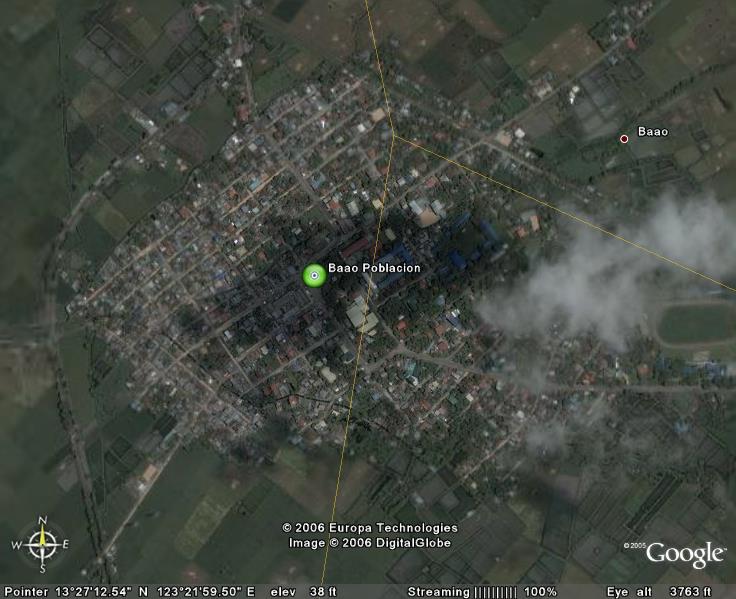 Here are various satellite images of Baao taken from Google Earth. Click on the links below: Riconada District * Baao Poblacion * Baao Catholic Cemetery * Baao Central Public School * Baao Lake * Baao Parish Church * Baao Public Market * Baao Train Station * Diversion Road * Ramirez Residence * Agdangan * Buluang * Del Rosario * La Medalla * Salvacion * San Francisco * San Isidro (Oras) * San Jose * San Juan * San Nicolas * San Ramon * San Vicente * Santa Cruz.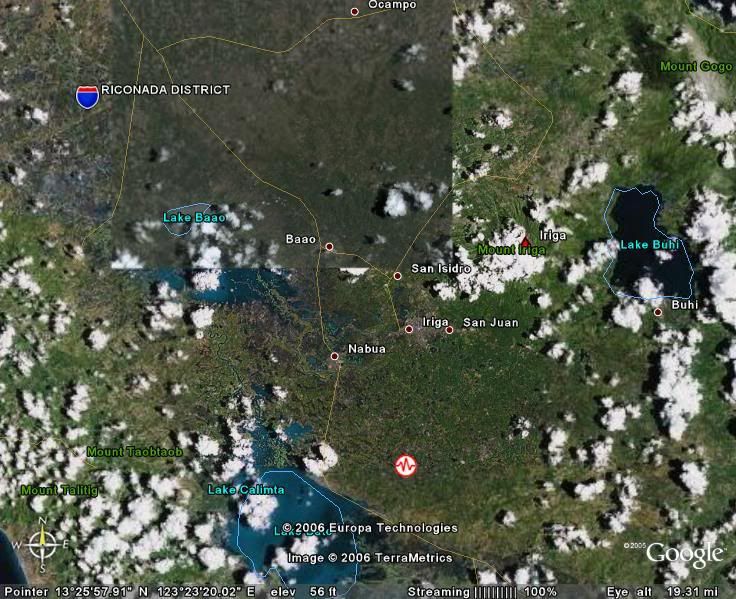
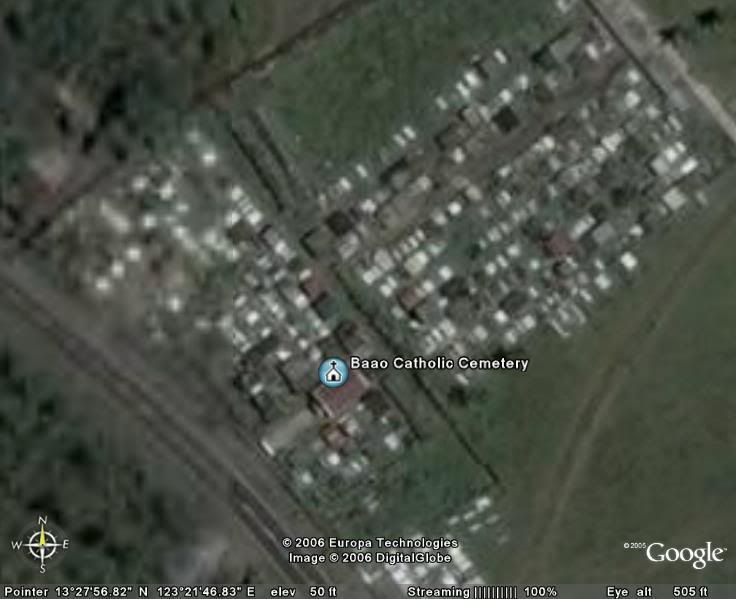
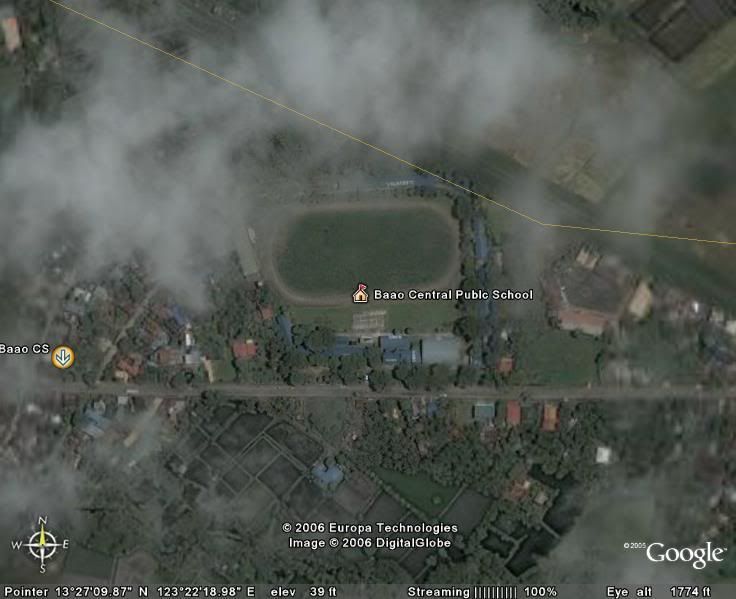
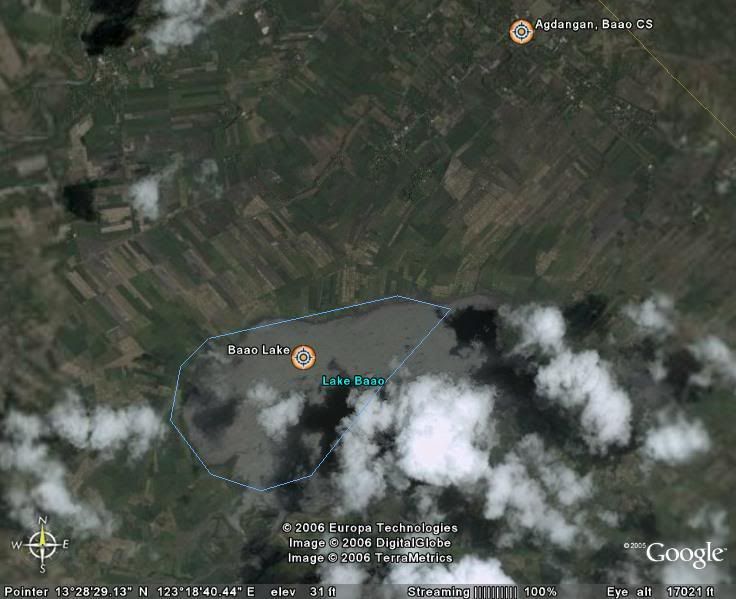
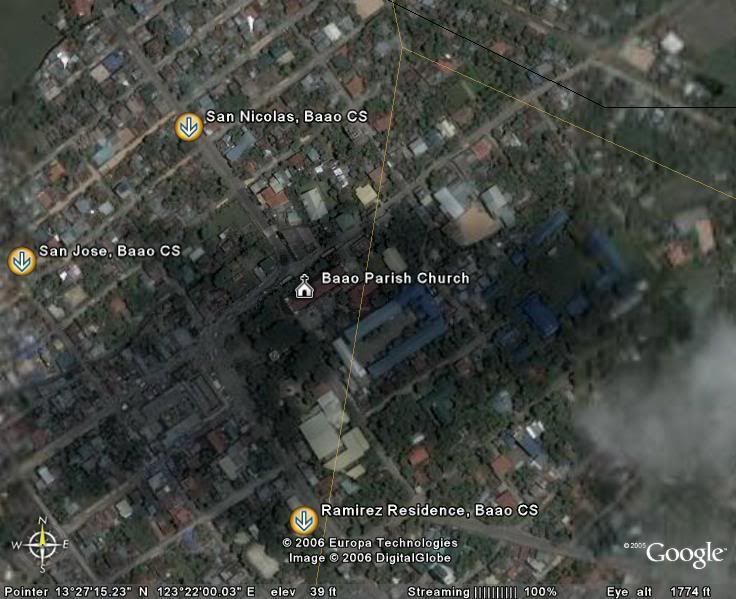

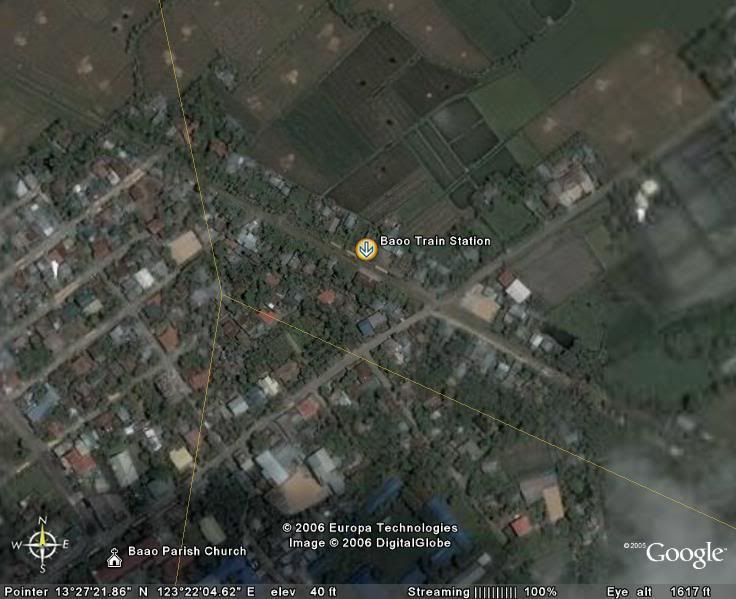
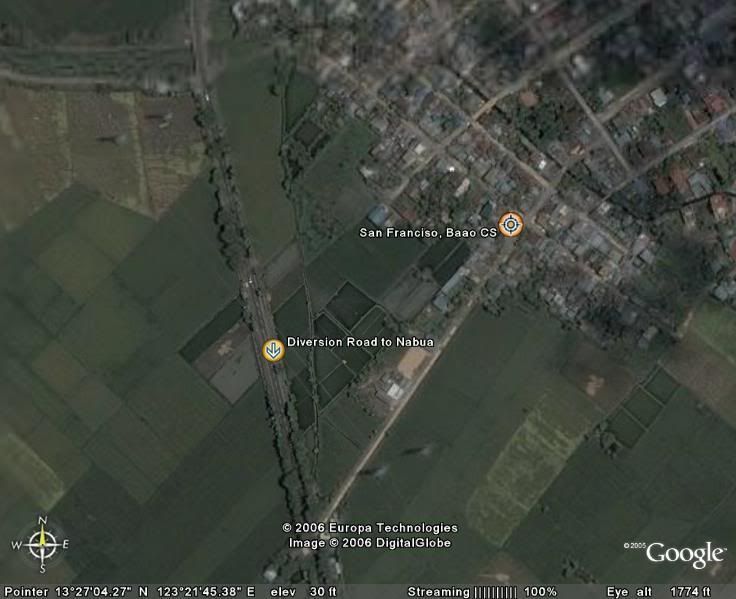
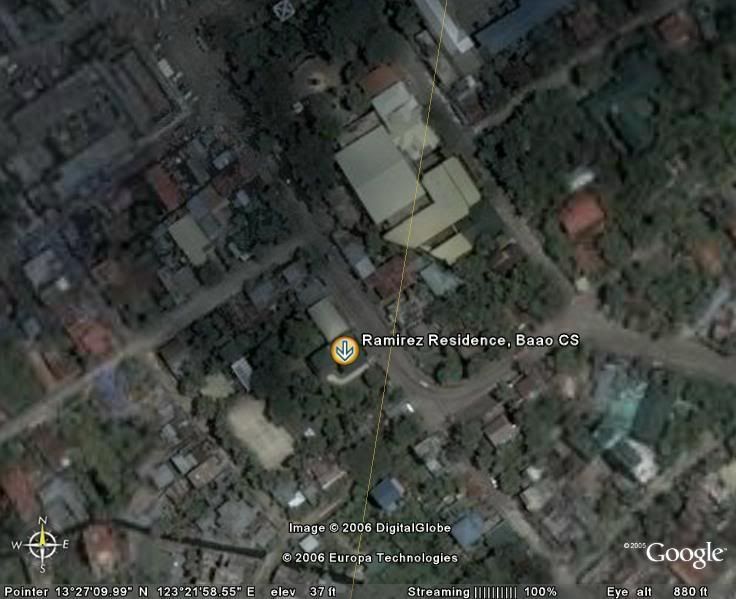
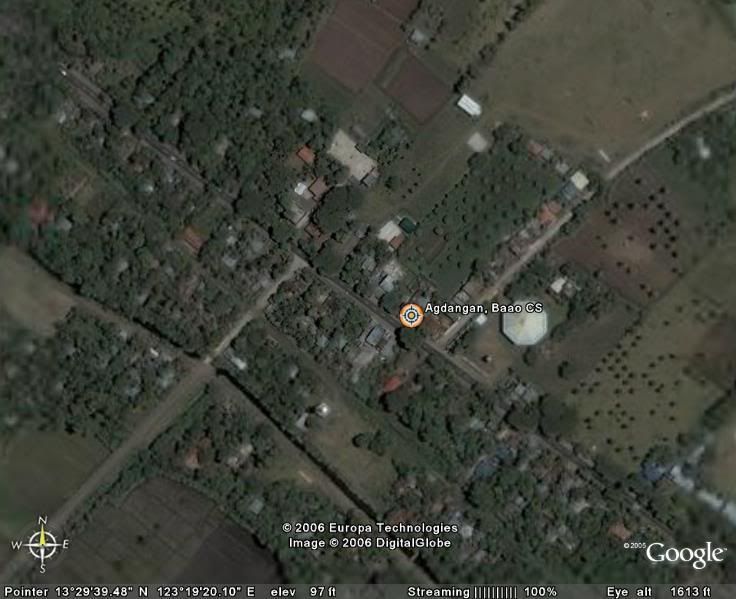
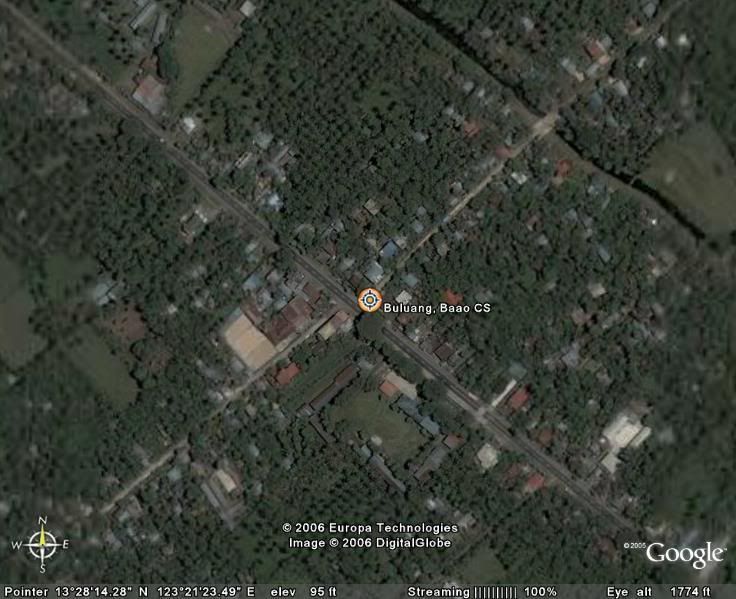
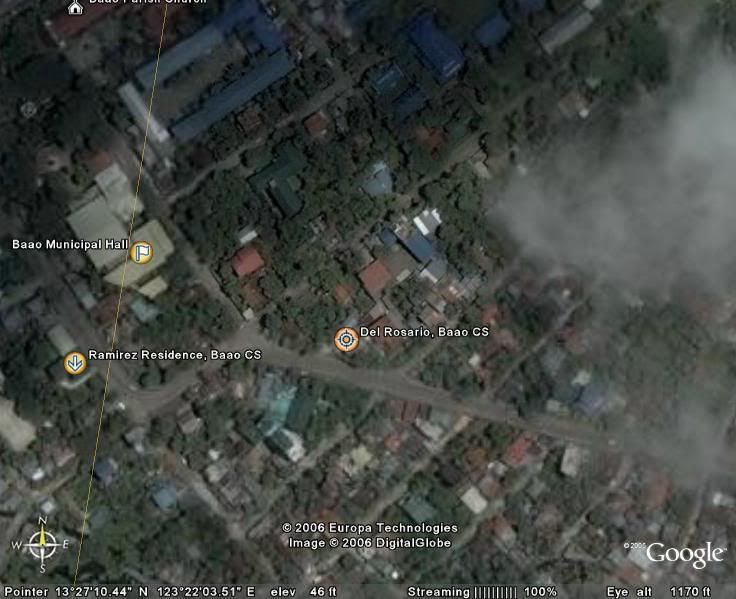
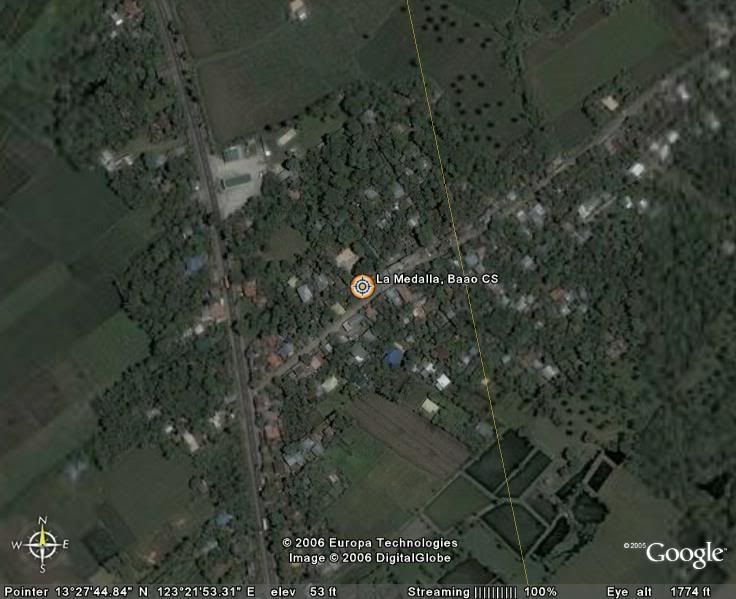
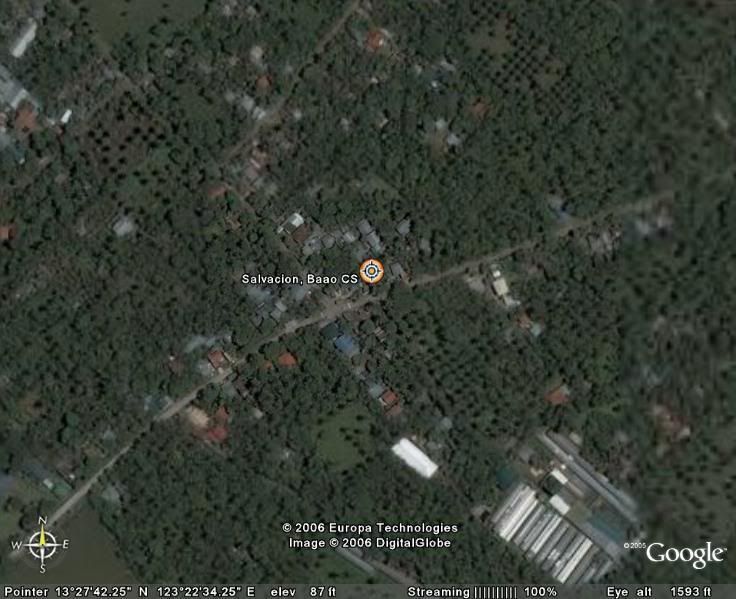
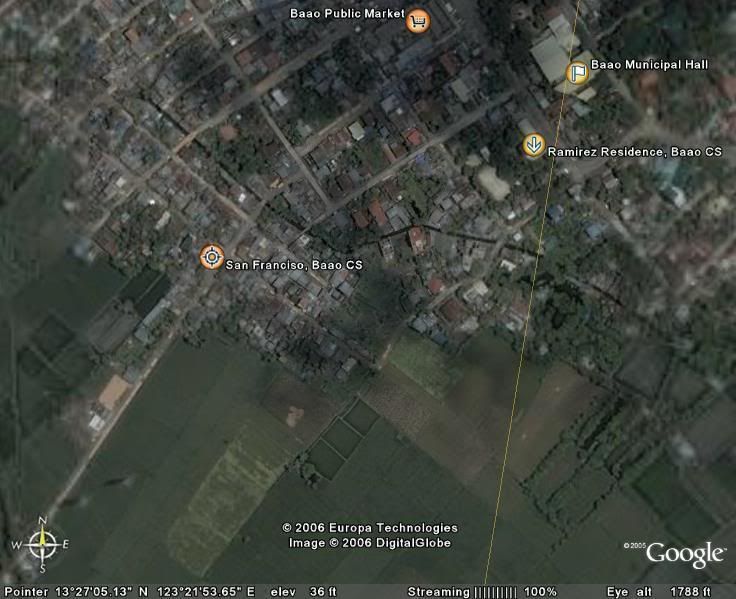
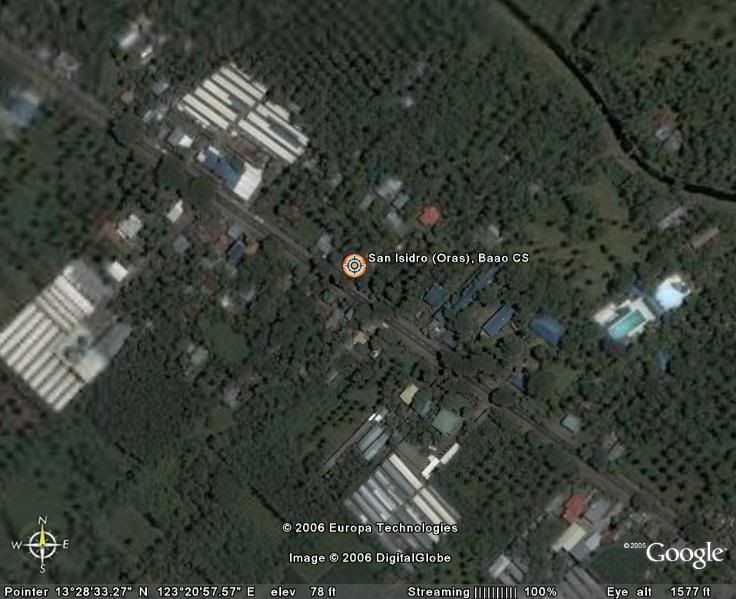


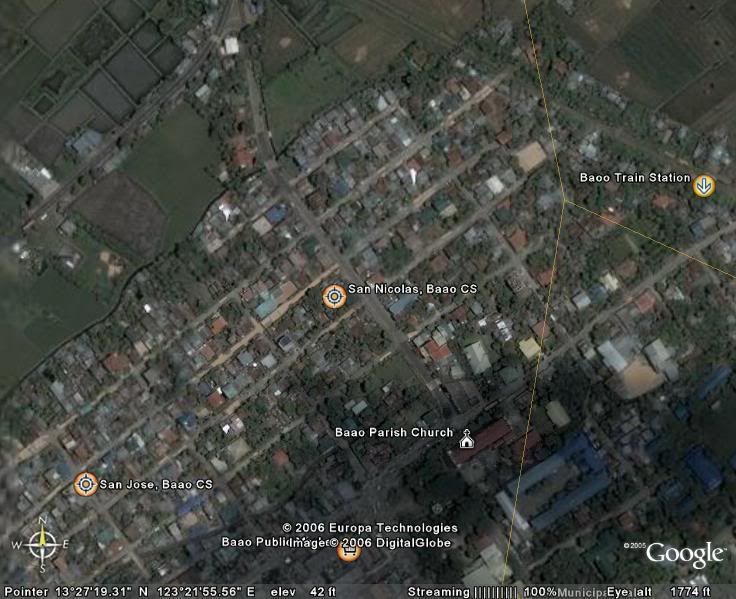
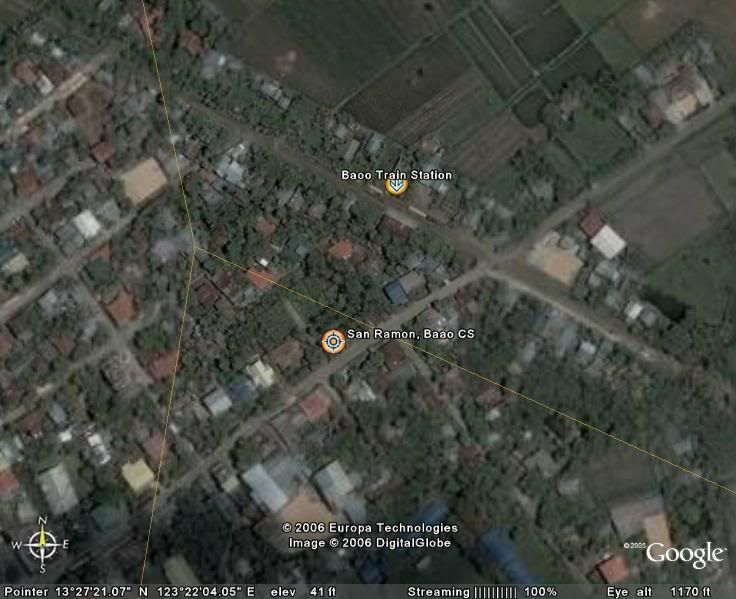

7/4/06
A poem for the Centennial Birth anniversary of Luis G. Dato
A Poem for My Home
I’m home in my own little patch of heaven,
a simple clump of cool peaceful green
encircled by blue horizons and air
interrupted by cream-colored concrete
toasted warm by the vibrant sun
and chilled in the pale orange evenings.
From its skies shower fragrant drizzle
that stir like the poems of Luis Dato,
or buffet like storm and lightning
worthy of the compatriots of intrepid Barlin.
Thus here, scattered among its days
are brave heroes and wise men born
By its lakeshores today as long ago
a determined people carves out a living
as they would a kingdom,
themselves prince and princesses
and lords and ladies with castles on the hill.
They would sit barefoot in the dewy summer grass
and watch at the end of day, their children, the slow,
steady flowering of their dreams.
Then shades of evening roll over
the oranges yellows and purples of a fading sunset
darker now under the waxing moon,
at the moment in shadows never alone,
in this little heaven we have known.
7/1/06
The Uglification of the Town Plaza
 The rapid development of Baao has brought about contrasting results (see Images of Baao). On the one hand, some historical sites have been renovated (e.g., the
 The town plaza used to be a spacious green park in the middle of the town. But now the area has been considerably reduced by new structures built there by the municipal authorities. The result is congestion. Moreover, some parts of the park have become a junkyard for cars and machines, etc. Food stalls have been allowed to squat on the public domain.
Before, at any vantage point in town one can see the beautiful mountain ranges of Caranday and the lofty
Baao sorely needs of a town planner who will take into consideration the environmental needs of the community… someone who can keep the town GREEN and CLEAN.
6/22/06
A poem by P.B. Robosa
Grandpa and the Gabi
Grandpa cooks and eats every
part of the gabi,
savors each kind in any cooking,
consuming the roots, the stems
up to the best part,
the large waterproof leaves.
I even saw him enjoying
the fragrance of the gabi flowers.
He patiently rolls the young leaves
into cylinders and ties them
with the stem and before the rice cooks,
steams them over its surface,
later adding shrimp paste and masticating
each singularity of the plant
with his fingers
down to its very core.
I, his grandson laughs
at his innocent, frugal folly.
Stems and discarded leaves cover my plate--
I doubt the parts are edible.
I, his grandson was not yet old enough
to eat like a goat.
I will grow up in a world
tired of nibbling at the leaves
and fears the bite of the acid beneath
and throws the plant away.
Maybe I will be one to retrieve
the rejected plant from the garden,
patiently tear the leaves to small pieces,
and discover its distinct forgotten taste.
Grandpa cooks and eats every
part of the gabi,
savors each kind in any cooking,
consuming the roots, the stems
up to the best part,
the large waterproof leaves.
I even saw him enjoying
the fragrance of the gabi flowers.
He patiently rolls the young leaves
into cylinders and ties them
with the stem and before the rice cooks,
steams them over its surface,
later adding shrimp paste and masticating
each singularity of the plant
with his fingers
down to its very core.
I, his grandson laughs
at his innocent, frugal folly.
Stems and discarded leaves cover my plate--
I doubt the parts are edible.
I, his grandson was not yet old enough
to eat like a goat.
I will grow up in a world
tired of nibbling at the leaves
and fears the bite of the acid beneath
and throws the plant away.
Maybe I will be one to retrieve
the rejected plant from the garden,
patiently tear the leaves to small pieces,
and discover its distinct forgotten taste.
5/15/06
A poem by P.B. Robosa
Keeping Time
My grandmother never had much,
slender frame and thin gray hair
sang old lullabies and danced
through afternoon siestas
and wiled away time playing cards.
I still remember her calloused fingers
as she puffed on the senorita
toward her chest and out again,
watching time’s rhythm
with the melodies from the old radio
and fresh wind from the window.
I remember how she used to put pillows
on her lap for my afternoon naps.
Nothing felt better than drifting
to sleep wrapped in one of grandma's hands,
listening to her cracked, aged voice
singing, "sleep, oh, baby."
So warm, I thought I would never feel cold
again.
My grandmother never had much,
slender frame and thin gray hair
sang old lullabies and danced
through afternoon siestas
and wiled away time playing cards.
I still remember her calloused fingers
as she puffed on the senorita
toward her chest and out again,
watching time’s rhythm
with the melodies from the old radio
and fresh wind from the window.
I remember how she used to put pillows
on her lap for my afternoon naps.
Nothing felt better than drifting
to sleep wrapped in one of grandma's hands,
listening to her cracked, aged voice
singing, "sleep, oh, baby."
So warm, I thought I would never feel cold
again.
4/18/06
Holy Week 2006 Photo Albums
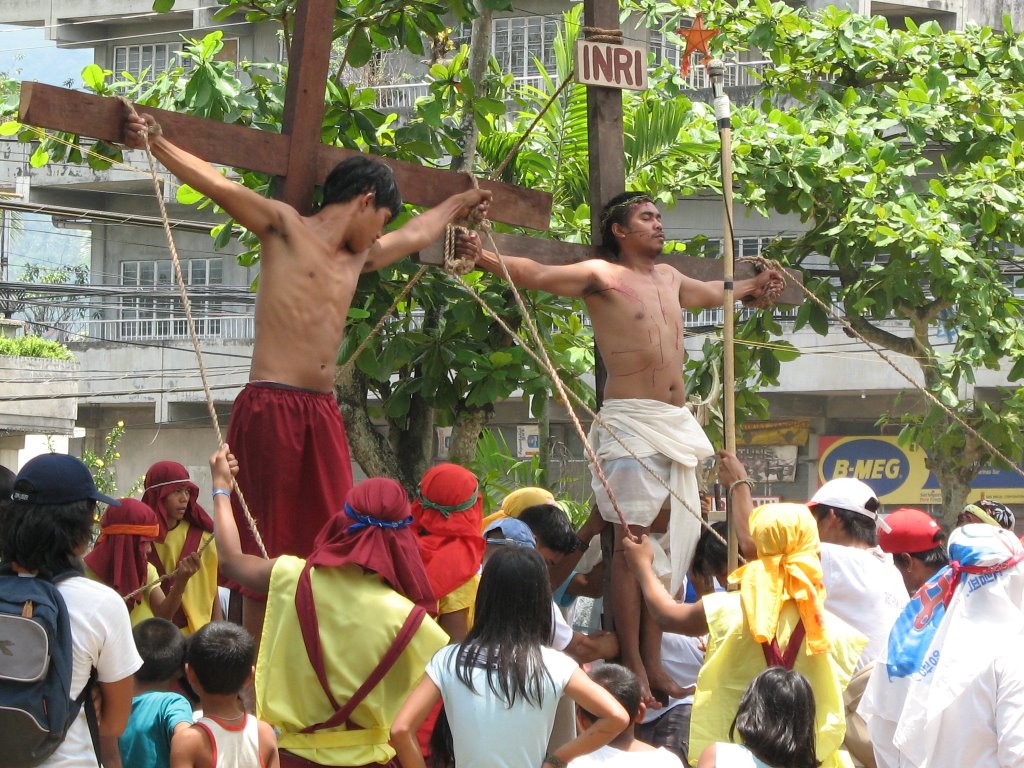 Cenaculo staged at the church patio last 12 April 2006 (Wednesday). Click on the following links for more photos of the Holy Week 2006 taken by Felipe Fruto Ll. Ramirez, SJ:
[1] Domingo de Ramos; [2] Miercules Santo; [3] Viernes Santo; [4] Soledad; [5] Domingo de Pascua; [6] Images of Baao; [7] Medical Mission
4/16/06
Requiem for the Dead at the Battle of Agdangan
In memory I was a fool deceived by
flighty passions and arrogant dreams.
Running with charlatans in uniforms
reveling in brave talk of revolution.
So marched I to the clangor of battle
death calls dressed in bold adventure
The sun must rise in the east, they say,
bring a fiery sunrise to this doomed land
where flowers never bloom and flourish
on infertile fields undisturbed by graves,
mourned and unlamented by our tears.
Water and till it with blood to let it live?
Content then I was already of my rest,
glad of my lot and place seeking only
that the land enfold me with abundance
as I pay it my love and constant labor
following the ways of my ancestors
in this land of kindness and beauty.
Fate inevitably revealed trumpet calls
from ominous clouds from the west
threatening to lay waste my fields
where my hand had lovingly borne
seeds from my table and flowers bloom
on land once laid bare and unsown.
Banners bloodied beneath Simurai
at the stairway to clouds we battened
against the intruder overwhelming
with pen, paper, bullets and Krags.
I stood with teeth and fist and fought,
‘until shot and blades our belly opened
Is there not valor in simply to love?
To clasp and embrace what is dear.
Isn’t courage a fight for lost causes?
for treasured but long lost freedoms,
for struggles to grow strong and better
for that end-greatness was our quest.
To see in my land, my children beloved
warmed soft by gold, glowing sunbeams,
running free in the fields of the fallen
over grass blown by unfettered wind,
on earth held not by might and power,
but by those who loved and tilled her.
Memory die away lost to the grave,
words, deeds finally pass and fade
So, stranger by the road, recall then
that day that I lost all, but saw at last
my sunrise, my grass green and warm
as I fell at the Battle of Agdangan.
P.B. Robosa
flighty passions and arrogant dreams.
Running with charlatans in uniforms
reveling in brave talk of revolution.
So marched I to the clangor of battle
death calls dressed in bold adventure
The sun must rise in the east, they say,
bring a fiery sunrise to this doomed land
where flowers never bloom and flourish
on infertile fields undisturbed by graves,
mourned and unlamented by our tears.
Water and till it with blood to let it live?
Content then I was already of my rest,
glad of my lot and place seeking only
that the land enfold me with abundance
as I pay it my love and constant labor
following the ways of my ancestors
in this land of kindness and beauty.
Fate inevitably revealed trumpet calls
from ominous clouds from the west
threatening to lay waste my fields
where my hand had lovingly borne
seeds from my table and flowers bloom
on land once laid bare and unsown.
Banners bloodied beneath Simurai
at the stairway to clouds we battened
against the intruder overwhelming
with pen, paper, bullets and Krags.
I stood with teeth and fist and fought,
‘until shot and blades our belly opened
Is there not valor in simply to love?
To clasp and embrace what is dear.
Isn’t courage a fight for lost causes?
for treasured but long lost freedoms,
for struggles to grow strong and better
for that end-greatness was our quest.
To see in my land, my children beloved
warmed soft by gold, glowing sunbeams,
running free in the fields of the fallen
over grass blown by unfettered wind,
on earth held not by might and power,
but by those who loved and tilled her.
Memory die away lost to the grave,
words, deeds finally pass and fade
So, stranger by the road, recall then
that day that I lost all, but saw at last
my sunrise, my grass green and warm
as I fell at the Battle of Agdangan.
P.B. Robosa
4/7/06
The Museum of Baaoeño Memory
Name and Address
The Museum will be called "Museum of Baaoeño Memory/Museo ng Pang-alalang Baaoeño/Museo kan Pangiromdom Baaoeño/ Museo kin Pangrorom Taga Baao. It is located at the Second Floor of the Coop Building of St. Monica Academy, Baao, Camarines Sur.
Organizational Structure
The museum will be a joint project of the St. Monica Academy and the SMA Alumni Association with a continuity clause that it will be maintained by the Spirit of 78/82 with Mr. Paulix Robosa as its Curator even if the batch is no longer the SMAAA host. SMA shall provide the site of the museum and The Spirit of 78/82 through Mr. Paulix Robosa as volunteer curator will undertake the duties of such position for the proper operation and maintenance of the same. The curator will organize appropriate activities for the promotion of Baaoeño arts and culture and will link with appropriate government agencies for grants and other sources of funds.
Museum Objectives
1. The collection and exhibition of Baaoeñana materials and artifacts i.e photographs, historical and cultural documents, literature, visual art works.
2. The promotion of Baaoeño arts and culture through occasional exhibits featuring museum collection and Baaoeño artists and artworks.
3. The acquisition of archival materials regarding Baao and its people from sources all over the Philippines and the world, and to make them available to students and researchers.
Tentative Dates of Opening
June 29,2006/August 23, 2006/ December 8, 2006
4/5/06
Another Poem by Luis G. Dato
 Day In the Farm
by Luis G. Dato
I’ve found you fruits of sweetest taste and found you
Bunches of duhat growing by the hill,
I’ve bound your arms and hair with vine and bound you
With rare wild flowers but you are crying still.
I’ve brought you all the forest ferns and brought you
Wrapped in green leaves cicadas singing sweet,
I’ve caught you in my arms an hour and taught you
Love’s secret where the mountain spirits meet.
Your smiles have died and there is no replying
To all endearments and my gifts are vain;
Come with me, love, you are too old for crying,
The church bells ring and I hear drops of rain.
4/1/06
Projects: Agdangan & Dato Monuments
Our projects are receiving quite an attention, from an e-mail of a Baaoeno expatrate living in the U.S. who heard about the project in Agdangan, I sent the following reply:
"The project at Agdangan has taken years to evolve, It's started when I researched an unrecorded battle that took place there and it's called The Battle of Agdangan. This research was given an award by the National Historical Institute ( if you looked around my house, the large painting I had on the wall depicts this battle) For a while, the Municipio and I commemorated it every February 25 instead of the Edsa revolution which falls on the same day. This commemoration was forgotten because of changes in local politics and also because it was confused with the Massacre of Agdangan which is an entirely different event and falls on October 17. I hesitated requesting an official marker from the NHI (although they already agreed) because we still have no official site to place the future marker. So to make this happen (This would make Baao again as a historic site) and to stop the confusion between the "Battle" and the "Massacre" we decided to put a Monument commemorating this two events with two markers one for each said event. The monument will be called "The Monument of the Victorious Fallen" with the statue of the an Angel of Victory between two walls at right angles forming a "V". On one hand she holds a sword to indicate the Battle of Agdangan marker, on the other hand she holds a torch for the Massacre marker. Both markers will be placed on the wall/leaves of the "V". The Barangay council of Agdangan has already designated a place and it is supported by the Mayor and we placed a tentative date for the inauguration on October 17, 2006, the 62nd anniversary of the Massacre of Agdangan. We estimate the monument to cost around 1,000 dollars."
About the Barlin Centennial, we're at the one month countdown. We're now preparing the Program and making list for those to be invited as participants, feel free to make suggestions. The mayor was about to start constructing the marker except for some last minute consultations with Tyong Tiday who needs to ask permission to the owner of the lot. Anyway everything came out positively except for this minor delay and he asks for some modifiactions on the marker which we are having made now. We would like to have him play a major role in our unveiling of the Luis G. Dato monument sometime in July, so we have informed him about this because he was one of those who organized a testimonial for the late poet when he was alive.
Thank you. Paulix Robosa
"The project at Agdangan has taken years to evolve, It's started when I researched an unrecorded battle that took place there and it's called The Battle of Agdangan. This research was given an award by the National Historical Institute ( if you looked around my house, the large painting I had on the wall depicts this battle) For a while, the Municipio and I commemorated it every February 25 instead of the Edsa revolution which falls on the same day. This commemoration was forgotten because of changes in local politics and also because it was confused with the Massacre of Agdangan which is an entirely different event and falls on October 17. I hesitated requesting an official marker from the NHI (although they already agreed) because we still have no official site to place the future marker. So to make this happen (This would make Baao again as a historic site) and to stop the confusion between the "Battle" and the "Massacre" we decided to put a Monument commemorating this two events with two markers one for each said event. The monument will be called "The Monument of the Victorious Fallen" with the statue of the an Angel of Victory between two walls at right angles forming a "V". On one hand she holds a sword to indicate the Battle of Agdangan marker, on the other hand she holds a torch for the Massacre marker. Both markers will be placed on the wall/leaves of the "V". The Barangay council of Agdangan has already designated a place and it is supported by the Mayor and we placed a tentative date for the inauguration on October 17, 2006, the 62nd anniversary of the Massacre of Agdangan. We estimate the monument to cost around 1,000 dollars."
About the Barlin Centennial, we're at the one month countdown. We're now preparing the Program and making list for those to be invited as participants, feel free to make suggestions. The mayor was about to start constructing the marker except for some last minute consultations with Tyong Tiday who needs to ask permission to the owner of the lot. Anyway everything came out positively except for this minor delay and he asks for some modifiactions on the marker which we are having made now. We would like to have him play a major role in our unveiling of the Luis G. Dato monument sometime in July, so we have informed him about this because he was one of those who organized a testimonial for the late poet when he was alive.
Thank you. Paulix Robosa
3/17/06
Wartime Photo of Baao #2
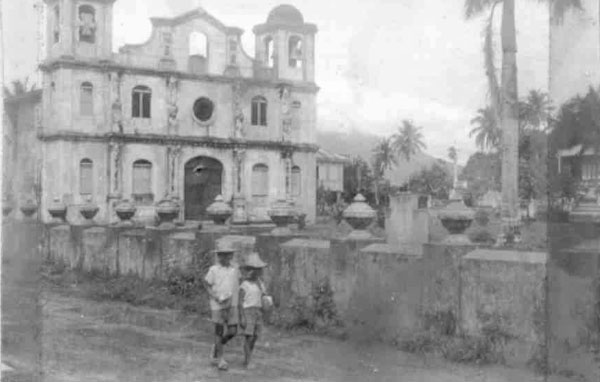 The other picture of Baao which Harold L. Brodhead took was the Catholic parish church. For this photo he wrote a simple caption: 'Baao, Philippine Islands - Baao Church'. Note the fence with huge balustrades around the patio. The old convento which was destroyed by fire in 1966 is partly visible in the picture. And so is the grotto of Lourdes. The neo-baroque facade of the church with its twin belfry is a pre-war (1920s) construction, but the thick walls made of lime and ladrillos originate from the Spanish era. See more of Harold's Wartime Photos published in the internet.
Wartime Photo of Baao #1
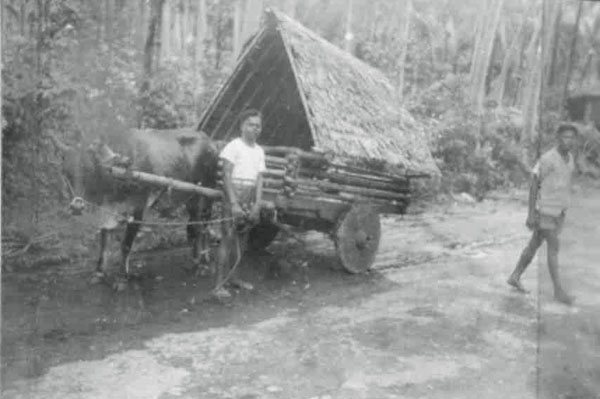 Harold Laubach Brodhead (b. 1924 and d. 1959) from New Jersey was a technician 5th grade of the 158th Infantry “Bushmasters”. He partici- pated in the liberation campaign of Luzon (15 Dec 1944 - 4 July 1945). While passing through Baao he took this picture and wrote the following caption: '1945 Baao, Philippine Islands, Flips and carts, many lived in the carts and toured the islands.' "Flips!" - that was how the American soldiers condescendingly called the Filipinos. Harold was obviously misinformed about the use of the carreta. After the war he joined the occupation forces in Yokohama, Japan. See more of Harold's Wartime Photos published in the internet.
3/15/06
Poems about BAAO by P.B. Robosa
Rignos Waves
From the window pane
rice fields stretch and shimmer
westward slivers a path
out of gaze along the winding vale.
Ancient farmers gave names
to winds from certain places
with a sense of the invisible
that I first felt and remembered
Sea from the blue sky,
thousands of sparrows dappled its face
I didn't know that there
was a word for life's desires
To leap out of itself
Now looking down and
swooping past my window
and I stand still in wonder.
Around My House
To the east sits steady
Ki Agang’s throne
A splendid blue volcano
where the sun slips in at dawn
The south sprawls a cacophony
of people, friends and kin
clump of trees and concrete
to lose cares in the busy din.
The vast north open boundless
where soothing breeze begin
and Simurai skims the clouds
and the road to dreams open
Sunsets to the west bodes peace
and balmy tranquility sleeps
at Baao lake where my people began
with God’s glory, grandeur, and gifts.
At Barlin Park
Summers end at Barlin park
beneath St. Bartholomew’s
I’d climb the stone bulwark
slippery and wet with dew
and see the town anew
then I would jump free
to the soft grass below
on scraped hands and knee
as others would follow
and roll away triumphantly
and the monkey bars will call
and we clamber up the device
arm over arm we’d crawl
through a gauntlet of pipes
till at last our breath sufficed
no one remembered home
and we wished for the rain
scanning the clouds that roam
as we cleared the grass of grain
where last summer we had lain
come at last the first raindrops
from skies turning grey and dim
I’d close my eyes to the drops
till water reach grass tips rim
and lift me off a carpet of green
From the window pane
rice fields stretch and shimmer
westward slivers a path
out of gaze along the winding vale.
Ancient farmers gave names
to winds from certain places
with a sense of the invisible
that I first felt and remembered
Sea from the blue sky,
thousands of sparrows dappled its face
I didn't know that there
was a word for life's desires
To leap out of itself
Now looking down and
swooping past my window
and I stand still in wonder.
Around My House
To the east sits steady
Ki Agang’s throne
A splendid blue volcano
where the sun slips in at dawn
The south sprawls a cacophony
of people, friends and kin
clump of trees and concrete
to lose cares in the busy din.
The vast north open boundless
where soothing breeze begin
and Simurai skims the clouds
and the road to dreams open
Sunsets to the west bodes peace
and balmy tranquility sleeps
at Baao lake where my people began
with God’s glory, grandeur, and gifts.
At Barlin Park
Summers end at Barlin park
beneath St. Bartholomew’s
I’d climb the stone bulwark
slippery and wet with dew
and see the town anew
then I would jump free
to the soft grass below
on scraped hands and knee
as others would follow
and roll away triumphantly
and the monkey bars will call
and we clamber up the device
arm over arm we’d crawl
through a gauntlet of pipes
till at last our breath sufficed
no one remembered home
and we wished for the rain
scanning the clouds that roam
as we cleared the grass of grain
where last summer we had lain
come at last the first raindrops
from skies turning grey and dim
I’d close my eyes to the drops
till water reach grass tips rim
and lift me off a carpet of green
3/14/06
The Death & Burial of Msgr. Jorge Barlin
The original Spanish article was published in the review El Santisimo Rosario, vol. XXIV (1909) p. 722; English translation by Felipe Fruto Ll. Ramirez, SJ.
The Illustrious Msgr. Jorge Barlin Imperial
Dominican tertiary, first native bishop of thePhilippines
In this Review, we said something about the life of this renown prelate, a Dominican tertiary, who had lived defending us and died loving us. Now we shall say something about his death in order to mourn him and beg our readers to pray for his soul.
The illustrious Filipino prelate was not yet old. He was born in Baao on April, 1850. He was every bit a ‘Spaniard’ and a Dominican. He was consecrated bishop of Nueva Caceres on June 1906. When he came to Rome in May of this year 1909, for the purpose of making an ad limina visit, he became grievously ill in the Eternal City and suffered with great courage until he died on the fifth day of September in the college of the Spanish Dominican fathers at Via dei Condotti [see photos], comforted by all the sacraments and the special apostolic blessing sent by His Holiness Pius X.
Vested in episcopal regalia, his body was waked in the church. The day after his death, a solemn funeral Mass was celebrated. The Reverend Father Jeronimo Coderch, Consultor of the Sacred Congregation for the Sacraments and assistant to the Most Reverend Master General of the Order of Preachers, officiated. The aforementioned Reverend Father General Jacinto M.a Cormier intoned the final prayers of commendation for the dead.
Various cardinals, bishops, superiors general of religious orders, secular priests, and devout members of the Roman nobility attended the funeral.
The cadaver of the virtuous Dominican bishop was placed on an elegant funeral car and brought to the cemetery of Campo Verano, and laid to rest in the chapel owned by the Dominican Fathers in that cemetery.
May the illustrious prelate rest in peace!
The Illustrious Msgr. Jorge Barlin Imperial
Dominican tertiary, first native bishop of the
In this Review, we said something about the life of this renown prelate, a Dominican tertiary, who had lived defending us and died loving us. Now we shall say something about his death in order to mourn him and beg our readers to pray for his soul.
The illustrious Filipino prelate was not yet old. He was born in Baao on April, 1850. He was every bit a ‘Spaniard’ and a Dominican. He was consecrated bishop of Nueva Caceres on June 1906. When he came to Rome in May of this year 1909, for the purpose of making an ad limina visit, he became grievously ill in the Eternal City and suffered with great courage until he died on the fifth day of September in the college of the Spanish Dominican fathers at Via dei Condotti [see photos], comforted by all the sacraments and the special apostolic blessing sent by His Holiness Pius X.
Vested in episcopal regalia, his body was waked in the church. The day after his death, a solemn funeral Mass was celebrated. The Reverend Father Jeronimo Coderch, Consultor of the Sacred Congregation for the Sacraments and assistant to the Most Reverend Master General of the Order of Preachers, officiated. The aforementioned Reverend Father General Jacinto M.a Cormier intoned the final prayers of commendation for the dead.
Various cardinals, bishops, superiors general of religious orders, secular priests, and devout members of the Roman nobility attended the funeral.
The cadaver of the virtuous Dominican bishop was placed on an elegant funeral car and brought to the cemetery of Campo Verano, and laid to rest in the chapel owned by the Dominican Fathers in that cemetery.
May the illustrious prelate rest in peace!
3/13/06
A Poem by Luis G. Dato
 The Spouse
 Rose in her hand, and moist eyes young with weeping,
She stands upon the threshold of her house,
Fragrant with scent that wakens love from sleeping,
She looks far down to where her husband plows.
Her hair dishevelled in the night of passion,
Her warm limbs humid with the sacred strife,
What may she know but man and woman fashion
Out of the clay of wrath and sorrow—Life?
She holds no joys beyond the day’s tomorrow,
She finds no worlds beyond her love’s embrace;
She looks upon the Form behind the furrow,
Who is her Mind, her Motion, Time and Space.
O somber mystery of eyes unspeaking,
O dark enigma of Life’s love forlorn;
The Sphinx beside the river smiles with seeking
The secret answer since the world was born.
Subscribe to:
Posts (Atom)