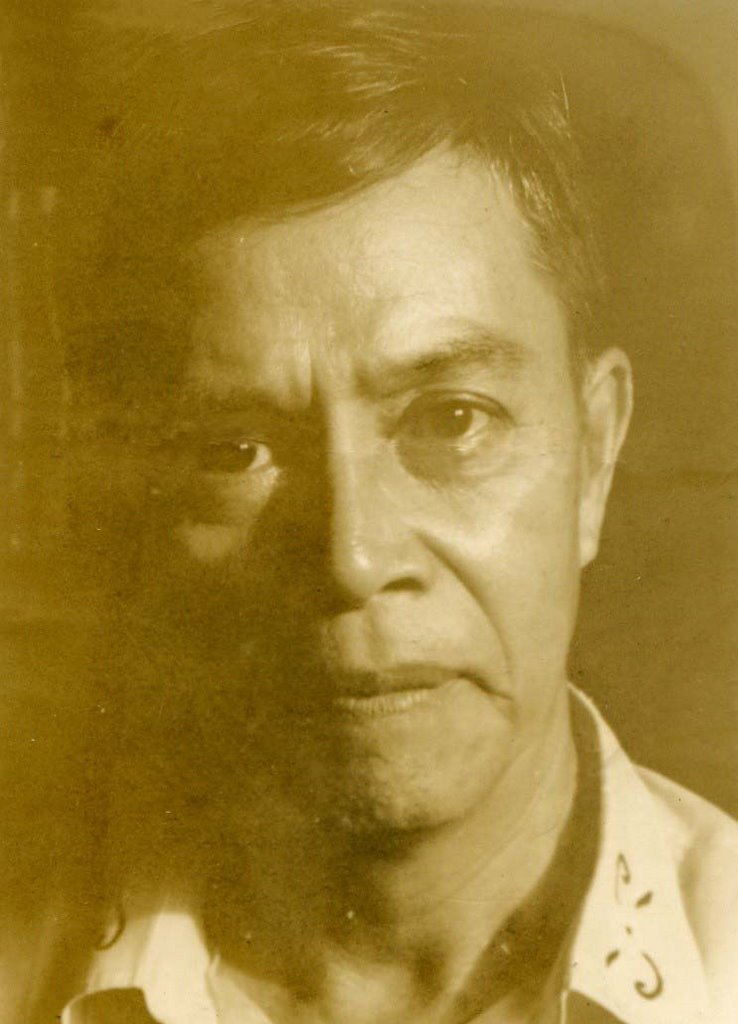
11/9/07

Rizal's words in Baaoeño

Pinaka-Oreng Pa-aram
ni Dr. Jose P. Rizal
Itinaga-Baao ni P.B. Robosa

In an answer to a challenge from one of my students from Rinconada who is attending my class on Rizal who commented that Rizal is too intellectual and the youth has difficulty in relating to him, I wrote the following translation of Rizal's "Last Farewell" in simple Rinconada/Baao Bicol to see if indeed Rizal's words would be too alien to the youth. In the process, I discovered the beauty and capacity of our own dialect in expressing Rizal's lofty thoughts and feelings.

Paaram ragang kinagis-ngan, potos kin kaliwanagan
Perlas sa dagat subangan, na-uuda tang kamurawayan
masingaya kong dara, patapos na ag mamundong buway,
kun tibaad kuntana ini mas makintab, lab-as ag sagana,
itatao man diyaday tolos-tolos para sa kanimong karayan.

Sa lugar kin labanan, sa init ka labo-labong sinabatan
dali tolos kong ibubuklad, ining buway kanimo idudusay,
maski sari man, puon tanom, sa takay o sa lubid bitayan
patag man o talbungan kin binitay , labanan o kasakitan
dyaday man a buway, itatao kun ayaton ka banwaan.

Ngamin ko babayaan pag langit bumuka ag nag aninag
senyas ka tapos ka ngitngit sa silaw ka bagong ramrag
kun kulang a pagkapula kuyan na namumulaag mong aldow
ibulos ag iluyap a pula ka rugo sa kanakong mga ugat,
itugma sa nagpupuon mong aldow na mabukang liwanag.

Pangitorogan ko, ko ako igin pa, padagos angan nagdakulo
pagitorogan angan nagin tawo, nagkukusog angan nagtalubo
Namapandawan ka, kanamong perlas ka sirangan dagat
oda lua a maitom mong mga mata, tulid a kiray sa angog
di nagmomundo o nagngongorot, oda mantsa kin pagkasupog.

Anap-anap ka kanakong buway, mawot ko angan pa man
Tara! babaoy kana kalag ko na sumusuway ag babayaan,
Tara! Aba-a nang raay na mauda tanganing ika mabuway,
mag-raan ta tumindog ka, nakaasag sakanimong kalangnitan,
sa raga mong malumok, magturog tuninong uda katapusan.

kun usad na aldow, ika maka-koko, sa kanakong linubngan
nagtatarok kaiba sa mga doot usad na bumobukang burak
irokot mo kanimong mga ngabil ta ako kanimong inarkan
ag mamatean ko sa angog maski sa irarom kan lubungan
a maimbong mong inga-inga, pagpayaba mo mamamatean.

Pabayaeng a aninag ka bulan roktan ako kin luway-luway,
togote na ako kumintab sa mga silyab ka bagong sirang
a na angin pababayaeng magoyop-oyop kin kamunduan
ag minsan kun agko tumogpa, sa krus ko, usad na gam-gam
pabayaeng maghingalo, ag magsiwit kin katoninongan.

Sa init ka aldow, paalisnga-wa pagkabasa ka tubig uran
tanganing agrangay ko sa langit, paitaas man darahon,
Ludok na inabot kining buway ko, bayae a iba pagtangisan,
pagsinarom ka apon ag saka ako ipinapangadyi man
Banwaan, tabi ipagnayo-ngayo na sa Dios ako magingalo.

Pangadyi mo man su ngamin na ma-irak na nauda
su ngamin na nag-agi kin di maisip na mga kasakitan
para sa mga ina ta, na di matapos a na mga panambitan
para sa mga ilo, mga balo ag mga rakop na pinasakitan
pag-arangan man Banwaan, yana kanimong katalingkasan.

Saka kun gab-i matawoban na kin riknum a kamposanto,
oda nag aantabay kundi mga guiraan na sanang gayo,
di pag ribuka a na muraway o bugawon a na misteryo.
Ag kun marungog mo a na tunog kin gitara o harpa,
ako yan payaba kong Banwaan, kanimo na nagkakanta

Pag ining linubngan kanako, di na basang mabisita
ni ono na basang krus o bato na natutudang tanda
ipaarado mo sa para-oma angan a raga iluyap niya.
A abo ko bago malopa na ag di na mapakinabangan,
bayaeng mapino ag maging polbo sa ragang kaiwasan.

Ang-gan sa di na kaipuwan na ako man marumruman
lilibutun ko an maiwas mong langit, bukid o patag
maludok ko ikang kakantahan ang-gan ika mananok
sa kolor, ta-mis ag ugong ka kanakong panambitan
sa pagkabo-ot ag pagmangno, sa kanimo na oda kataposan.

Payaba kong Banwaan, ika na kanakong kamondoan
Filipinas kining buway, ironga ining kanakong paaram
babayaan ko kanimo, mga kag-igin, mga nabotan.
Lugar na uda mga uripon, ana kanakong pai-iiyanan
kun sari a pagtubod buway saka Dios a kag kahadean.

Paaram, mga kag-igin, mga ngod, mga parte ko buway
mga kayamon ko sa pobreng baloy na naroromroman
mamuya kamo na ako umaabot na sa ka-ingaloan
paaram nakagnirit na dayowan, kaiba ko sa kamuyawan
paaram sa ngamin na nabootan, a pagraan kapa-ingaloan.


10/11/07

Moro Raids in Baao?

by P. B. Robosa

Some readers found my commentary on the image of 19th Century Baao surprising, if not hard to believe. What Moro raids? Moro raids on a place so far inland?

Moro raids were indeed a real danger for almost a century in the Bicol Region not excluding the town of Baao. Moros or Muslim raiders would wreak havoc on the coastal and inland towns of Bicol in search of loot and Christian slaves to be carried away to be sold or traded. Many of these towns, after being raided, would not recover and would disapper from the map. In the Rinconada area I can only assume that these raiders either entered the area from the Bicol river upon entering San Miguel Bay or through a land trail through one of the many gaps along the mountain range west of the region beside the China Sea. There are many accounts that the raids reached inland towns.

One of these recorded accounts, about the measures against them, was the one observed by Fr. Gomez-Platero then parish priest of Baao who recorded that sentinels(which were called with the Hispanized-Bicol word "bantayes") would roam the main streets of Baao ready to give the alarm.
A local account in Nabua recorded the instance when the Moros reached one of the outlying Barangays and the people took refuge in the parish church which was protected with "lantakas" or small cannons installed specifically for this purpose.

The failure of the provincial government to provide protection to the people, even after repeated petitions, elicited simply the province-wide instructions to make bladed weapons, bows and arrows and the setting up of an alarm system with sentinels and lookouts. The Battle of Tabgon Bay is almost unknown to our students but it was a Bikolano victory over these raiders. The threat of the Moros only ended in the close of the 19th Century upon the arrival of the steam-powered launch which could easily outrun and shoot their "vintas" out of the water. This happened more than a century ago and I still remember my Grandmother when as a child when misbehaving would silence me, "Paluway, marungog ngani ika kin mga Moro".


10/5/07

The Philippine Colors

by P. B. Robosa

A reader of this blog from Amsterdam, Peter Praggs, who studies flags, insists that I've got to make some modifications on my painting below. He writes " not only was the sun depicted with a mythological face but also the stars, and why is the Blue field on top if it was a time of war". I must disagree.

First, the painting is an interpretation of an event based on eyewitness accounts and the only part of the account I reconstructed is that it shows the dead and wounded being carried from the battle field on carabao drawn sleds and these casualties are being replaced from the rear, their comrades taking up the rifles where they fell and firing away. there was no mention of flags but by the gallant way the Bikolanos opened the fight and by military practice this is not impossible.

Second, from the accounts of the Americans, the flag captured is usually a personal battle standard, the Philippine flag was at its infancy and no rules was laid out as to its dimensions, size of the fields and proper color, but I depicted the Philippine flag from what I know from Aguinaldo's instruction, which was in use in the Bicol Region already at this time. someone did told me of the mythological faces on the stars, but I need to look into this.

Third, the practice of putting the Red field on top in times of war was suggested to Pres. Quezon when he laid out the practice of using the "Official Philippine Flag" in 1919. Although some historians who favor Aguinaldo, now insists that at the Battle of Alapan in 1898, the flag was carried into battle with the red field on top.

All these fascinates about history, its in the past but you do not run out of interesting things.


10/3/07

"The Philippine Colors are Removed from the Battlefied at the End of the Battle of Agdangan" by P.B.Robosa


Oil on canvas, Unfinished, dimensions 6ft x 9 ft, First Exhibited at "Exploring Expressions" P.B. Robosa's First One Man Show, UNC Museum. On permanent display at the Museum of Baaoeño Memory, St. Monica Academy, Baao, Camarines sur.

9/12/07

The 19th Century Image of Baao by J. Rizal's Bodyguard

by P. B. Robosa


Ten years ago, on my occasional visits to the Ayala museum, I came upon the exhibit entitled "The Two Joses". A show celebrating the works and the friendship of Jose Rizal and his one time companion and bodyguard, the Spanish Lieutenant of the Civil Guard, Jose Taviel de Andrade. At a time when photography was impractical, Andrade, a talented artist, recorded his travels through graphite sketches and gave us the only extant image of Baao (so far) in the 19th century. During his visit to the town on May 30, 1887, he made the above sketch.

 
A major pictorial zone of the sketch appears to be the town center showing at the background a roofed structure surrounded by a high fence. Houses appear to be scattered around this structure. Could this be the town marketplace? On the foreground appears to be a mound decorated with plants and a Cross planted at the center. Could this be a town memorial/monument to a Christian town or to the town founder St. Peter Baptist?

  The sketch make the village appear fortified against some danger, could the above sketch of a timber and grass bell tower be also an alarm system? The age of the Moro raids on the region was at its end, is this Baao--still fortified and prepared for a Moro raid?

  Could this poignant scene of a bony man and child reflective of the prevailing condition of the village at that time, depressed and impoverished or is this a random scene picked by Andrade of the people of the town?
9/11/07

Waiting for Christmas and the Lost Trees of Baao Park

by P. B. Robosa

This happy love of forgotten years,
shadowed beneath drooping leaves
of the rain trees and fire trees of old
could you not stay and bear the cold?

A little time more, in a heart's quickstep
join me on this vigil, in sleepy depth
the stars are beaming and the sun is lost
the bell tolling now for the day's ghost.

Bursting stars flowing behind clouds
of pale white angels with golden crowns
and the crystal moon brings silvery sheen
on this windy chill of September again.

The tranquil trees huddle in whisper
as we dream of them to again reappear
swaying stronger and stronger till December
but we awake as the cheap lights flicker.


7/2/07

A Model for Generations.

by P. B. Robosa

Bea Imperial Saw: Writing History Here and Now

History is written in hindsight, but history is created here and now. It is at the most welcome triumph of one of the daughters of Baao, Bea Imperial Saw that compelled me to write about her. Like all Filipinos I followed lightly but later on was transfixed to the TV set as the drama unfolded at the PBB House. Real life is really as dramatic if not more so than fiction. Characters that you see most of the time played from a script appear and happen in real life. I write history to find and show examples of heroism and admirable character so that they may be taught to the young in the hope that someday these are the kind of people they grow up to. Bea surprises me because in my lifetime I saw in her the traits that I only pick from my readings and sometimes make believe that they are inherent in my heroes. Unlike popular celebrities, Bea did not get to the hearts of the Filipinos because she was beautiful or one who knew how to sing, dance and act, but got to it because of her strength, fortitude and childlike humility all of them played out in front of a national audience. Her reactions towards the actions and counter-reactions of her anti-theses Wendy and the one I forgot already, plays out in my head and would be unforgetable through the years. It's like watching Manny Pacquiao slugging it out, except this time it was wits, feelings, words and actions instead of fists. It will be of no surprise that someday, if not one of these days, some writer would label her as the epitome of what is good, true and beautiful about the Filipina youth and worthy as a model of character for our troubled times. If Bea doesn't do a Nora Aunor later in life, again Baao is blessed with a Baaoeno of national stature to be added to our growing pantheon of worthy Baaoeno personalities. I may not be there to write about her so I'm taking my chance now.

6/10/07

Independence Day in Baao

The Spectacle of Independence Day Parades in Baao

P. B. Robosa

One of my fondest memories of youth in Baao are the yearly parades done to commemorate our Independence Day. I‘ve calculated the length of almost three decades that such a parade with floats, tableaus and participants with period costumes would remind or shock onlookers about vignettes of our history. My youthful interest then was aroused by the blood and gore that some scenes were played and made out of charcoal and red paint. I was too young to appreciate the historical details and significance of each display but today I could hold a short lecture for each of them to our unaware youth. Asking around, I learned that it was once a contest among Baao’s many organizations and interested individuals. I remembered my late father telling me stories of once he and his friends constructed a lumber, plywood and cement WWII tank with a bamboo barrel. The barrel was supposed to fire carbide gas explosions occasionally during the parade, but the “gunner” couldn’t come up with a good blast along the way, up until the “tank” reached the end of the parade when, in grand finale, a successful detonation split the bamboo canon in two.

These parades were held during the incumbency of the late Mayor Paulo L. Briones and probably participated in by civic minded organizations manned by members who were probably war veterans or who were used to or educated by such enactments. It was the heyday of Tito Dato and the ember days of Luis Dato, authorities both of our local and national histories so they probably had a hand into this. These efforts of our people in commemorating our struggles is truly remarkable and deserves not only our admiration but perhaps a revival of this practices to replace the present uninspiring celebrations of June 12. Jun Ramirez suggests we compile a wish list for Baao and definitely I’m including this on my list.

When construction workers were excavating the Barlin monument for its renovation, they found a marble plaque that read,” Dedicated to the Historic and Cultured People of Baao”, a part of the monument no doubt but is an apt description of the people of this town, let us live up to it, let us continue to be “Historic and Cultured”.


4/15/07

2007 Holy Week Images of Baao

01 Apr 07 Domingo de Ramos
02 Apr 07 Lunes Santo
03 Apr 07 Martes Santo
04 Apr 07 Miercules Santo
05 Apr 07 Hueves Santo
06 Apr 07 Viernes Santo
07 Apr 07 Sabado de Gloria
08 Apr 07 Domingo de Pascua


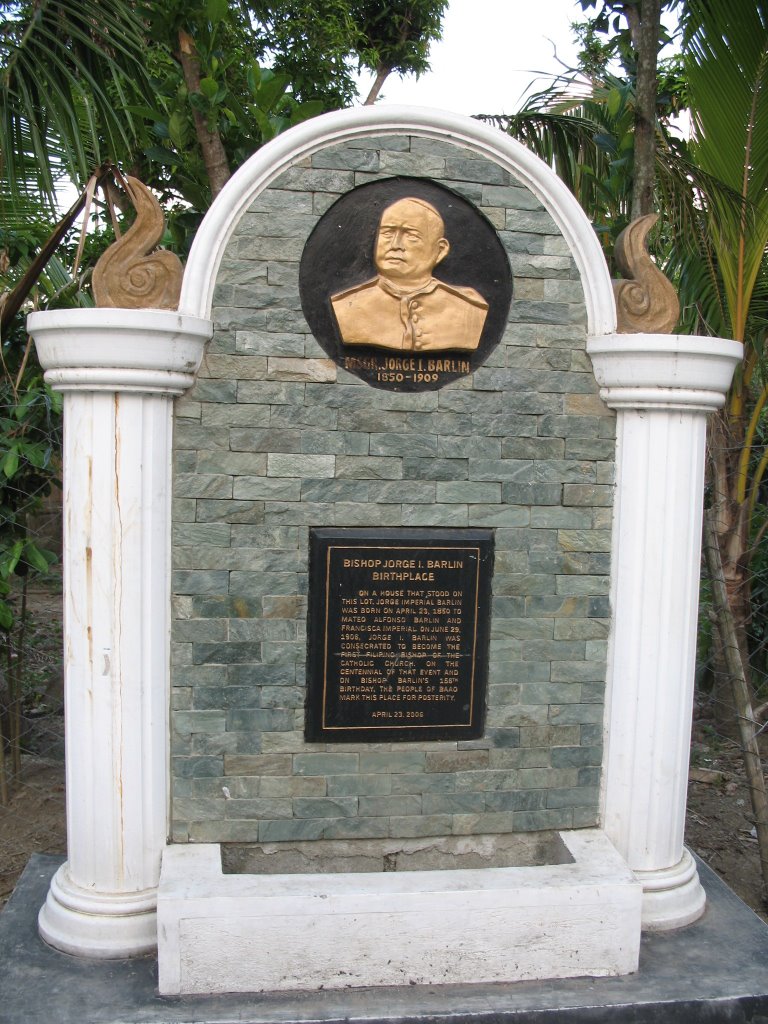
Historical Marker to Barlin's Birthplace

On the occasion of the centennary of Bishop's Jorge I. Barlin's ordination to the episcopacy, this monument was set up mark the place in Del Rosario, Baao, where this illustrious bishop was born.


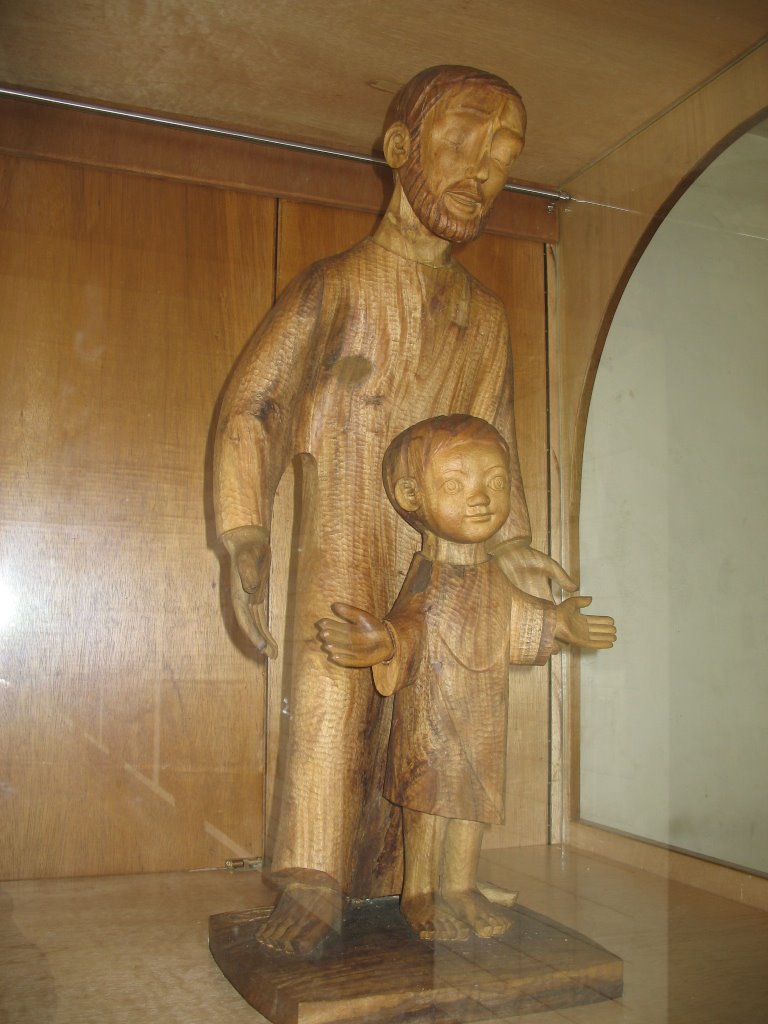
Vox Bustinera - Renown Sculptor from Baao

This wooden statue of St. Joseph by Vox Bustinera, renown sculptor from Baao, now graces the corridor of Loyola School of Theology. Von's famous wood carvings of the Stations of the Cross are also displayed at the Church of the Gesu of the Ateneo de Manila University. [Click here for more photos]


3/13/07

The Imperial Family Tree

The Imperial Family Tree has now been posted on the Internet. The "tree" is based on the mimeographed list (vol. I) distributed during the Imperial Clan Reunion in 30 March 1978, and supplemented by the list coming from the Intia Family (Sept 20, 1998). If I'm not mistaken, the genealogy published in 1978 was a "labor of love" of the late Luis G. Dato, poet laureate of the Philippines, whose mother as an Imperial.


3/3/07

A Spark into the Darkness

The Life and Death of Dr. Dominador Uy-Barreta

P. B. Robosa

I first heard the name of Don Uy Barretta while I was a member of a committee reviewing nominations to awards for outstanding Baaoeños. Back then, he did not call much interest in me as the committee was then more interested in other personalities or most of us were of the younger set who was unfamiliar with him or his story. The next time I came across the name was when I found an old list of Baaoeño army veterans and guerillas and among the list of casualties was the name of Dr. Dominador or Don Uy Barretta. This came to me as unusual as I’ve never heard that there was a Baaoeño guerilla doctor who died in WWII and immediately got me on the way of finding more about him and his remarkable story.

The Japanese were into the last days of their occupation of the Bicol region and Gen. McArthur had landed in Leyte. To weaken them in preparation for the liberation of the region, American planes were raiding Japanese installations and strafing retreating Japanese convoys. Emboldened Filipino guerillas stepped up operations and Japanese reactions were severe and brutal. Using local collaborators as informers, the Japanese heightened arrests and interrogations of suspected guerillas in a futile but determined attempt to capture and execute them.

In the early months of 1945 when Japanese casualties from American raids were high, the Japanese soldiers retaliated with intensified searches and arbitrary arrests. The first to disappear in these vicious Japanese measures were two local Baaoeños and the Chinese residents Diogna, Pana and Amado. All arrested were being taken to the Japanese Headquarters in Pili whose personnel were responsible for the Agdangan massacre months before.

In the twilight of February 4, the Japanese with the help of a masked informer, began to round up a second group of Baaoeño residents and started for the forested barrio of Salvacion. This barrio, on the skirts of Mount Simurai is where most Baaoeños had evacuated to wait out the end of the war. Like most Baaoeños who owned property in the poblacion but fearing Japanese atrocities, the young brood of the family of Mr. Cosme Uy Barretta stayed in the house of a relative in this barrio. Their house in the poblacion was periodically visited and guarded by the elder male members of the family to protect it from looters. The Uy Barretta’s stayed in the house of Ambrosio Baroño and at this house the raiding Japanese with their informer came knocking to look for Dr. Don Uy Barretta.

The Japanese excuse was that they needed a doctor to treat their wounded. Not suspecting anything wrong, Dr. Uy Barretta’s elder brother Santiago told them that his brother was at their residence in the poblacion and with a companion, Jesus Baroño, went with the Japanese to look for him. It was dark when they arrived at the house and with insistent knocks the house was opened by Dr. Uy Barretta’s companion, Feliciano Babilonia. As the Japanese began to search the house, Babilonia hid himself on the opposite side of the creek behind the house and only after a while returned to peep through the upstairs window to see the Japanese truck leaving with the doctor with them.

That night, the Japanese continued rounding and picking up others, like Messrs. S. Amilano, P. Blando and M. Botor, they arrested Mr. Perfecto Palma who was sick with dysentery. Seeing him being led away, his wife of 13 days, Mericia Badiola Palma volunteered to accompany him. The arrests that night also included Engr. Rufu Martirez whom they came upon awakening from sleep in one empty house they searched.

Mrs. Mericia Palma narrates that they were taken to a house in Pili which appeared to be used at the time as a temporary prison. Upon arriving, they met a group of prisoners which was being led away by Japanese soldiers and an officer. A while later, Mrs. Palma then saw the soldiers return with out the prisoners and the officer in the motions of wiping his sword of blood. It became clear to her that executions were taking place nearby.

While inside the house, Mrs. Palma counted 15 prisoners including themselves. For five days these prisoners endured interrogation, abuse, torture and the constant anticipation of death. Despite suffering no worse bodily harm than slaps to her face, she however, could not silently endure the sight of the suffering of her fellow prisoners and the inhuman treatment accorded by their Japanese captors. Coming only to ease the suffering of her ailing husband, she soon volunteered to feed all the prisoners herself. Thus, she witnessed personally the brutal torture the prisoners were made to endure. 

By the questions constantly being Dr. Uy Barretta, Mrs. Palma gathered that he was being forced to confess being a supporter of the guerillas. Hung from the ceiling with only his thumbs to support his body weight, he was swung to and fro by his torturer and with each swing a wooden club was slammed into his chest. This torture lasted until the torturer exhausted himself and Dr.

Uy Barretta will then be carried to his cell with his chest swollen and badly discolored.
After five days of interrogation, Mr. Palma helped by the fact that he had papers proving that was once an employee of the Japanese Mitsubishi company, convinced his captors of his innocence and along with his wife and Santiago Uybarreta was released. Not waiting any longer for the promised Japanese truck to take them to Baao, the three hiked the 15 kilometer or so distance to Baao on foot to the surprise of their families who thought they would never come back. As for the rest, they would never to return and the whereabouts of their deaths are not known to this day.

The search for Dr. Uy Barretta commenced as soon as the hope of his family that he will be released faded. Mr. Cosme Uy Barretta enlisted the help of Baao wartime Mayor Tomas Guevara to intercede for him with the Japanese authorities but as the war of liberation raged they came up with no information about him. The question of what really happened to him remains unanswered to this day and, Dr. Don Uy Barretta is officially listed as a “casualty of the Resistance’.

Is there truth to the Japanese suspicion that the doctor was a member of the resistance for which reason he was being made to confess during his torture and apparently the grounds the Japanese had to have him executed? His companion during the night he was taken away, Feliciano Babilonia affirms that although he had no official affiliation with any guerilla group he was constantly called upon to treat guerilla sick and wounded in an undisclosed place. Perhaps it is for this reason that the doctor would often take overnight fishing trips to nearby Lake Baao both as means for alibi and avoiding encounters with the Japanese.

Whether he was an active supporter of the guerillas in their operations with the Japanese or merely obeying an oath to help those in need either friend or foe we will never know. What we can be sure, nevertheless, from his actions that he did not hesitate to help civilians, guerillas and even the Japanese who used this reputation of his in their ruse to capture him. What was known of Dr. Uy Barretta before his arrest and death?

Dr. Dominador Uy Barretta was a bright young man and a scion of a wealthy Chinese-Baaoeño Family engaged in business in Baao. Equipped with the best education that could be afforded by his family, he trained to be a Doctor at the University of the Philippines graduating in 1943 in the height of the Japanese occupation the country. In the early days of the war right after the
bombing of Manila when transportation and communication to the provinces were in shambles, the young student had his taste of the hardships of war when he made a 400 kilometer hike to Baao from Manila to the astonishment of his worried family.

Years later, returning home to Baao after his graduation, he quickly set up a simple clinic in the family residence and treated all kinds of ailments and wounds without the benefit of medical supplies and medicine. Using only available resources, he treated infected wounds with maggots he cultured himself and used traditional herbal medicine for common aches. The later part of the war saw an escalation of violence and with very few doctors around, his makeshift clinic became swamped with patients. Some of his patients were the survivors of the Agdangan massacre who endured grueling walks or boat trips across the Baao Lake to come to him for help. Later, those who received his services were the pitiful victims of American stray bullets discharged during strafing runs against the Japanese.

In life, his willingness to help others might have been the very cause of his death. While there were other doctors around who may have aroused the suspicion of the Japanese, Dr. Uy Barretta was singled out for arrest possibly due to the treachery of the Filipino informers who could very well have known of his activities.

Because he provided aid to the Filipino resistance, his death therefore in the hands of the Japanese comes as no surprise. But what surprises us is the horrible fate that befell so promising a life, the fate that Dr. Uybarreta may very well have known would come to him if his actions were discovered. His death at the young age of 26 for which perhaps he accepted in the end as a final sacrifice in war comes as a spark into this chapter of darkness in our history. That spark, all the more made bright by his deeds while he was alive should guide our youth to the ideal that risking a comfortable life, even a promising future, for the opportunity to serve those in need truly makes life and death heroic.


2/6/07

CBCP Pastoral Letter on Bishop Jorge Imperial Barlin

To commemorate the centenary of Bishop Jorge Imperial Barlin's episcopal ordination (1906-2006) the Catholic Bishops' Conference of the Philippines issued this Pastoral Letter:

BONUS MILES CHRISTI

One hundred years ago, in 1906, the grace of the Episcopacy was granted to the Filipino people in the person of a Bicolano born in Baao, Camarines Sur, Jorge Barlin, who took as his Episcopal motto: "Bonus miles Christi" -- A Good Soldier of Christ. It was the first time after three hundred years of Christianity in the Philippines that a Filipino was given such a dignity—certainly, a milestone in the Philippine Church History, an event worth remembering and celebrating....

2/4/07

Blog Dedicated to Luis G. Dato

Stephen Cenon Dato Talla has published a blog in honor of his grandfather and poet laureate LUIS G. DATO. The blog contains the curriculum vitae of Chong Luis, his reflections on poetry writing, and several of his photos (one of which has been borrowed for this post). Click on the link below to visit Stephen's blog:

1/17/07

The Museum of Baaoeno Memory

The Museum of Baaoeno Memory sucessfully opened last December 29, 2006 amidst a strangely stormy weather. The room where it was located was earlier damaged by Reming and thus the museum opened with repairs unfinished and water from the bad weather dripping into the museum spoiled the otherwise significant and momentous occassion. There are plans to move the museum into a bigger place closer to the library. Calls have been made, specially by the SMA principal for donations of possible museum pieces in the form of household, farm implements, clothing articles, rare baaoenaina publications and photographs. The Museum is still currently improving its present set-up in time for the PAASCU visit as it is one of the best feature of the SMA library and a fine example of the Alumni collaborating with the school for the betterment of the local community. The Museum will also serve a s a venue for community extension as instruction aid to non-SMA students of Baao. The first activity of the museum slated for 2007 and sponsored by SMA batch 1983 is a workshop on finger painting for the SMA arts club members and other interested parties to be scheduled this February.

11/29/06

Remembering Our Own Baaoeño Heroes

Baaoeño Heroes

Bonifacio Day brings our mind back to our heroes specially those we were made familiar with in school. Many Baaoeños though do not realize that our town has it lists of heroes too. Many among our compatriots are men who risked or sacrificed their lives in the pursuit of an ideal like liberty and freedom. Some of them simply exemplified greatness in their fields and taught others the capacity of the Filipino race. This is the heroism of Jorge Barlin when he broke the glass ceiling imposed by foreigners on our race. So too would Luis G. Dato do in his skill in the borrowed English language. Unlike Barlin and Dato though, more like Bonifacio, are Baaoeños who are heroes dying with clenched teeth and spilling blood in defiance of an enemy. I will not distinguish heroes from martyrs or victims because in the end, we will always remember their pointless death especially in war. My list of Baaoeño Heroes is still incomplete but it goes way back into history:
1. The ancient Baaoeño warriors who fought the Spanish in the 16th century (according to Fray Gaspar de San Agustin)
2. The Baaoeños led by the Mesia Brothers who fought neighboring Nabua in the Baao-Nabua boundary dispute in the 19th century.
3. Bishop Jorge I. Barlin
4. The Baaoeño Principalia who were arrested in suspicion of conspiracy in the Philippine Revolution.
5. The Baaoeño officers and soldiers under Gen. Ludovico Arejola who fought the Americans in the Battle of Agdangan and elsewhere.
6. Luis G. Dato, known in Philippine Literature as one of the earliest Romantic Filipino poet in English
7. The innocents of the Agdangan Massacre.
8. Eusebio Dato, Baao’s Chief of Police under the Japanese who was found clandestinely aiding the Guerillas. He was arrested, tried and executed at Colgante Bridge, Naga City. There was once a proposal in the City government to rename the bridge in his honor.
9. Dr. Dominador D.Uybarreta, young wartime doctor of Baao whose unselfishness to aid the sick and wounded earned him the suspicion of the Japanese. He was tortured and executed somewhere in Pili.
10. The soldiers from Baao and various guerilla outfits formed in Baao which would harass the Japanese during the war.
There will be other heroes and I will continue the list.

10/20/06

In remembrance of the 62nd Anniversary of the Massacre of Agdangan

October 17th 1944


A dusty gray smoke
replaces the promise of
immaculate clouds of a new day
in the land scorched by the sun.
No one foresaw the fate of
doomed families, an end so grim
to stumble upon.
The sword unseeing, thrusts
and slashes with abandon
and lives cut down
like sheaves of grass and
left to prosper on fallow fields.
All to appease the vengeful,
bitter heart of the conqueror.
The old resigned to the falling
of the embers from the roof,
shield their wrinkled worn faces
with their bony arms,
and the young and the strong
let out suffering cries
and writhe in pain and wriggle
to be free of binding ropes as babies
are tossed to the bayonets
and the holocaust.
And a day passes to memory
from the infamy war

10/17/06

A Halloween Story in Baao

A Ghost of Fire
An Old Ghost Story set in Baao
Though we have no equivalent of a Halloween night in the Philippines, stories about fiery ghosts are heard in the town. With just a few details missing, we have a story like that of Washington Irving's "The Legend of Sleepy Hollow". These stories, I suspect arose from our proximity to a lake which would on occasion discharge the phenomenon we call in the vernacular as "santelmo". In Physics, "santelmo" or "St. Elmo's fire" is a ball of methane gas evaporating from a stagnant body of water like a marsh, lake or ricefield. Static electricity could set it aglow and the glowing ball would float eeriely on the surface of the water or ground were the wind would take it. I've heard of local farmers play with it by fanning it to make it move to any direction. To the unfamiliar, it would be a ghostly apparition, thus the stories we hear as children about ghosts that we might meet on the road at night. The following story was found published in a pre-war American magazine among a compilation of legends from the Philippines. The story was reprinted recently in the Philippines in a thick compilation of Philippine Legends. What other stories about Baao are hiding among the countless American publications about the Philippines I wonder.
Paulix Robosa

Once upon a time their lived in the town of Baao two robbers who were accustomed to attacking people who went past their hut, for in those days the government was weak. One day, a Tagalog merchant went to the robbers to sell them some clothes. The robbers offered the merchant good food and bed for his siesta. When they saw that he was sound asleep, they killed him and threw his body into the river. The night after the merchants death, people in the neighborhood heard a hoarse voice saying over and over again ”Give one half of my money to my family.” Chance travelers were terrified, for the spirit would whisper to them too. Finally the officials of the town asked the priest to exorcise the spirit. When he had performed the rites, the voice became silent. However at night a fiery man would walk about the town between the hours of seven in the evening to six in the morning. The inhabitants were so frightened that they ate their last meal of the day at Four o’clock, after which they shut up their houses tightly until the next morning. One time a traveler arrived in Baao about eight in the evening. As he passed the church, he saw the fiery man coming toward him. In terror he whipped up his horse and tried to get away, but the ghost caught hold of the reins and stopped the horse. The ghost turned into a real man and said, “Please tell the officials about the two robbers near the town. They killed a man secretly and took away his money.” Then the figure disappeared forever. In the morning the traveler hurried to the tribunal and told his story. The police captain sent five strong men to capture the robbers. Their guilt was proven and they were put into prison for a long time